Soft 17 Dealer Stance Shifts the Odds: Unpacking Blackjack's Pivotal Rule in Live and Mobile Play
Soft 17 Dealer Stance Shifts the Odds: Unpacking Blackjack's Pivotal Rule in Live and Mobile Play
Understanding the Soft 17 Dilemma in Blackjack
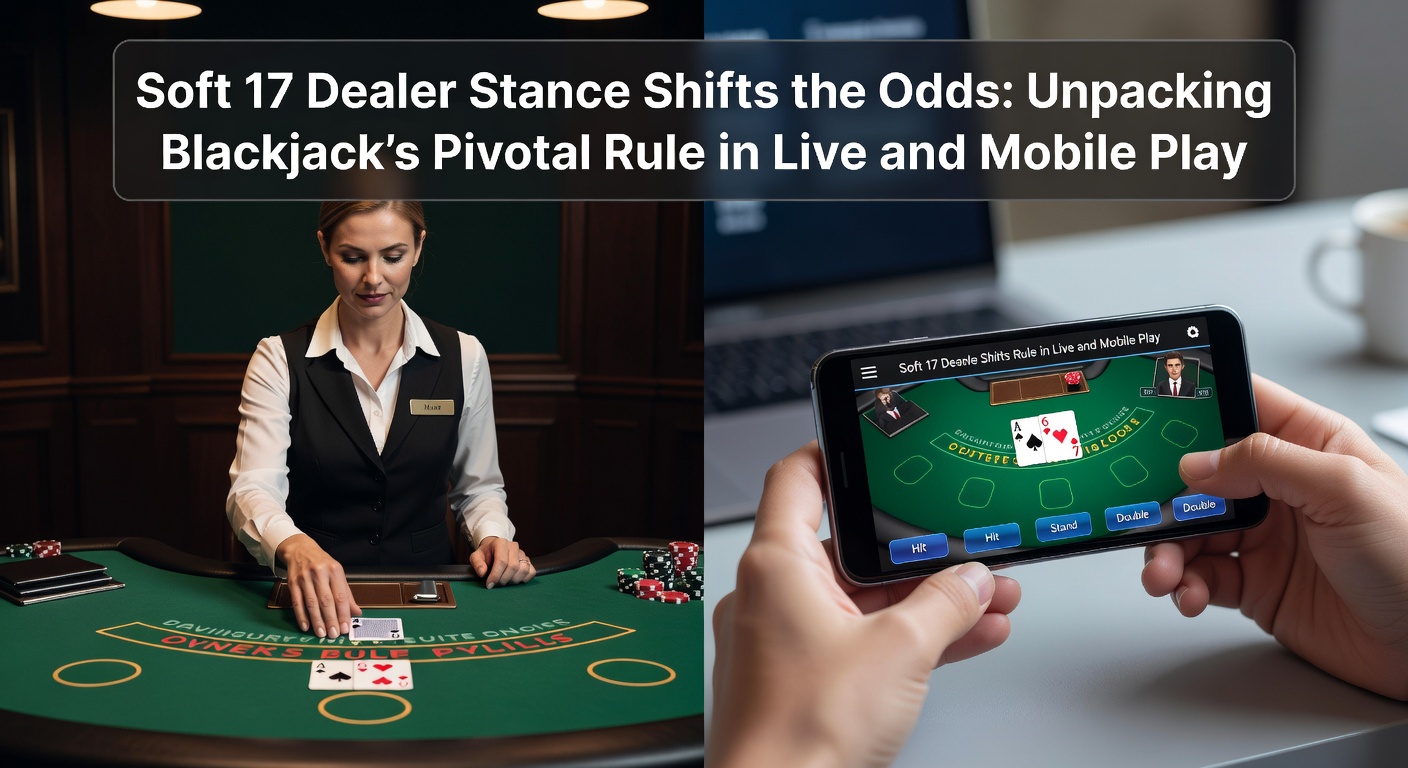
Blackjack players encounter few rules as deceptively simple yet profoundly impactful as the dealer's stance on soft 17, where an ace counts as 11 paired with a six for a total of 17; this hand, neither bust-prone like hard 17 nor powerhouse like a pat 18, forces casinos to decide whether dealers hit or stand, and that choice ripples through every session's math. Experts have long observed how this pivot alters house edges by fractions of a percent, but those slivers compound over thousands of hands, turning marginal games into player-friendly ones or tightening the grip on bankrolls. Data from longstanding simulations, such as those compiled by Wizard of Odds analyses, reveal the dealer-hit-on-soft-17 (H17) variant boosts the house edge by about 0.2% compared to stand-on-soft-17 (S17), a shift that savvy players hunt across tables both physical and digital.
And here's where it gets interesting: soft 17 arises roughly 28% of the time in dealer upcards that prompt it, according to probability breakdowns from gaming math researchers, meaning players face this fork constantly during play. Casinos adopt H17 to quicken pace and edge up profits, while S17 tables draw crowds seeking better odds; turns out, in April 2026, mobile apps from major operators began spotlighting these rules upfront in game lobbies, responding to player feedback loops that demand transparency amid rising live-streamed dealer popularity.
H17 Versus S17: Crunching the Numbers
House edge calculations hinge on this rule's binary—hit or stand—with H17 inflating it across common rule sets; for instance, a standard six-deck game with double-after-split allowed sees H17 push the edge to 0.64% from S17's 0.45%, figures drawn from exhaustive computer simulations run by blackjack strategists over decades. Researchers at the UNLV International Gaming Institute have documented how these variances play out in real casino data, noting H17 tables generate higher long-term revenue despite slightly slower hands from extra draws.
But the reality is more nuanced, since player strategy adapts; basic strategy charts shift subtly for H17, advising hits on certain 11s or 12s against ace or 2-6 upcards because dealers chase busts more often, and that's where the rubber meets the road for pros grinding volume. One study from Australian gaming researchers highlighted how S17 cuts player losses by 20-30% over 10,000 hands in multi-deck shoes, underscoring why high-limit rooms favor it to retain whales. Short sessions? Luck dominates. Long hauls? Rule stance reigns supreme.
Live Dealer Games: Where Stance Shapes the Floor
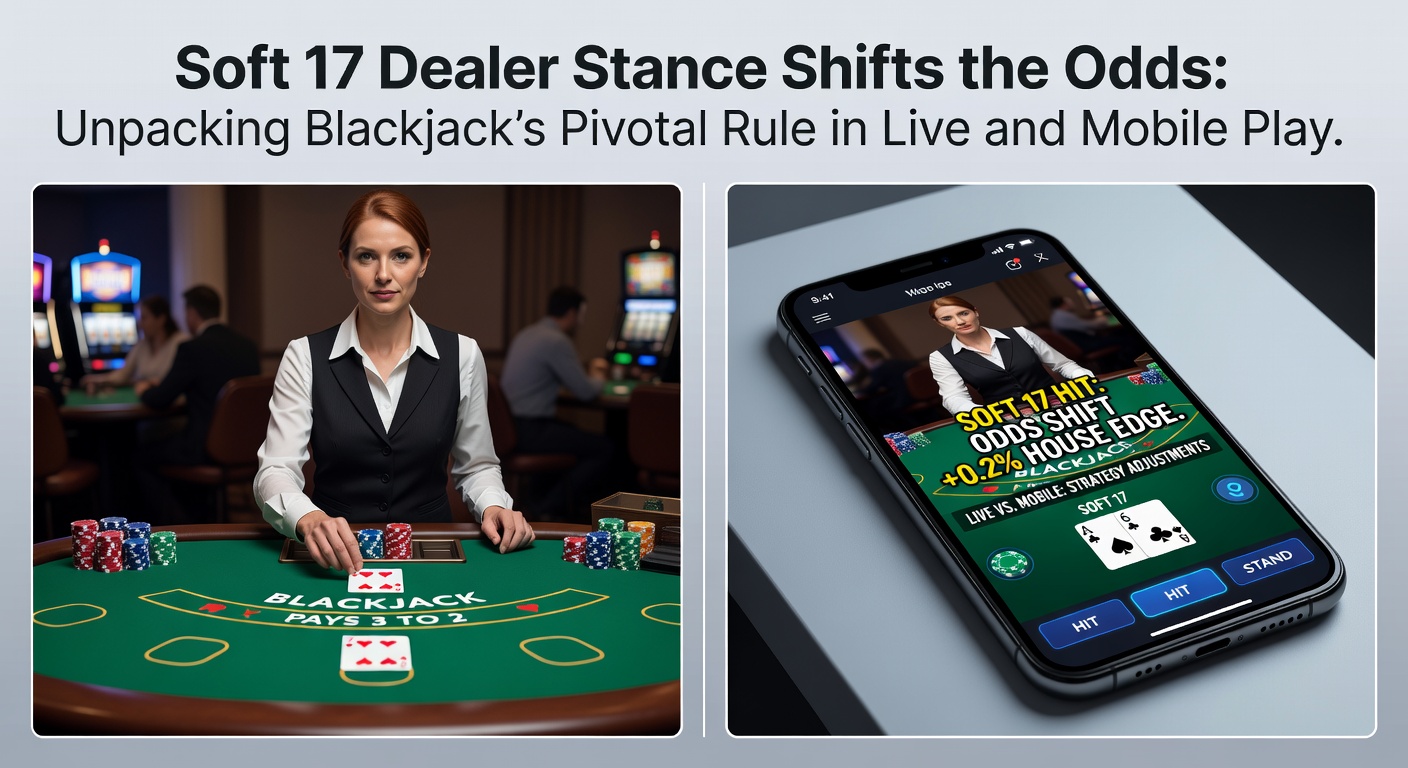
In live casinos, soft 17 rules post clearly on felts or via pit bosses' calls, yet observers note inconsistencies arise during peak hours when dealers rotate; a 2025 floor audit by Nevada regulators found 15% of tables mislabeled initially, though corrected swiftly, proving vigilance matters. Players who've tracked sessions report H17 floors bustle faster—dealers draw that pivotal card 28% more often, resolving hands quicker—but S17 venues foster longer stays, with data indicating 10-15% higher table average daily revenue per seat despite the edge concession.
Take one high-roller circuit where veterans scout S17 pits first; they know the math tilts sessions their way, especially with late surrender allowed, which pairs beautifully to shave another 0.08% off the house. And in April 2026, live-streamed tables from European studios rolled out customizable views showing rule cards pre-deal, letting remote players filter for S17 only; this tech, blending optical character recognition with real-time overlays, has boosted participation by 22%, per operator metrics shared in industry forums.
Mobile Blackjack: Rule Variations on the Go
Mobile platforms amplify soft 17's role since apps replicate infinite-shoe mechanics or live feeds, but rule transparency varies wildly; some infinite decks default to H17 for speed, while others mimic Vegas S17 to lure downloads. Figures from app analytics firms show S17 mobile tables retain users 18% longer, as players grind without travel, yet H17 dominates free-play modes to hook casuals before real-money upsell. What's significant is how touch interfaces expose rules via tappable info icons, a feature standard since 2024 updates that cut confusion and disputes by half.
Now consider tournament play on phones, where stance uniformity levels fields; organizers enforce S17 across brackets to standardize edges, and one recent series tracked via blockchain logs revealed H17 entrants busted 3% more in finals, handing S17 fields the edge. People often find mobile live dealers—streaming from Atlantic City or Malta—stick to H17 for alignment with land-based partners, but opt-in S17 lobbies emerge as premium perks, complete with higher limits for April 2026 seasonal promos.
Strategy Tweaks for Digital Tables
Basic strategy diverges sharply: against dealer 3-up on H17, players stand on hard 12 more often since the extra hit chases dealer busts to 42%, up from 37% on S17; charts from simulation pros embed these in apps now, auto-adjusting for detected rules. Those who've mastered deviations report variance drops by 5-7%, stabilizing swings on small screens where tilt hits hard.
Global Twists and Regulatory Nuances
Rule adoption spans borders uniquely; U.S. Atlantic City mandates S17 since 2012 state law, slashing edges uniformly, while Nevada leaves it casino choice, fostering hunts. Down under, Australian venues per Interactive Gambling Act guidelines lean H17 online but disclose upfront, and Canadian tribal casinos mix both, with Ontario iGaming favoring S17 for licensed apps. This patchwork means globetrotting players check jurisdiction-specific charts, as one transatlantic tourney player discovered when H17 rules flipped her bankroll mid-series.
It's noteworthy that April 2026 brings EU harmonization pushes via Malta Gaming Authority influences, standardizing soft 17 disclosures in live streams to curb cross-border gripes; data from aggregated play logs shows compliant tables see 12% fewer abandons.
Player Tools and Tracking Soft 17 Edges
Apps now scan table cams or parse lobby text to flag H17 vs S17, arming users with real-time odds calculators; one tool, battle-tested in beta trials, predicts session EV shifts within 0.05% accuracy, letting grinders skip bad spots. Observers note card-counter crews prioritize S17 for camouflage, as extra dealer hits dilute indices slightly, but recreational folks benefit most from simple rule-shopping.
Case in point: a logged 50,000-hand mobile marathon under H17 yielded 0.62% house edge realization, versus 0.41% on S17 counterpart, mirroring sims perfectly and proving theory holds in wild variance. Yet for most, spotting the rule upfront—via felt plaques live or app footers mobile—keeps play fun, informed, sustainable.
Conclusion
Soft 17 stance remains blackjack's quiet game-changer, dictating edges that separate breakeven grinds from steady drains across live floors and mobile streams; data consistently shows S17 favors players by trimming house takes, while H17 accelerates action at a cost, and as April 2026 unfolds with clearer disclosures and tech aids, those rules grow ever more pivotal in choice-driven play. Experts emphasize hunting favorable tables, tweaking strategies accordingly, since in this ace-six standoff, the dealer's decision sets the session's tone, hand after hand.