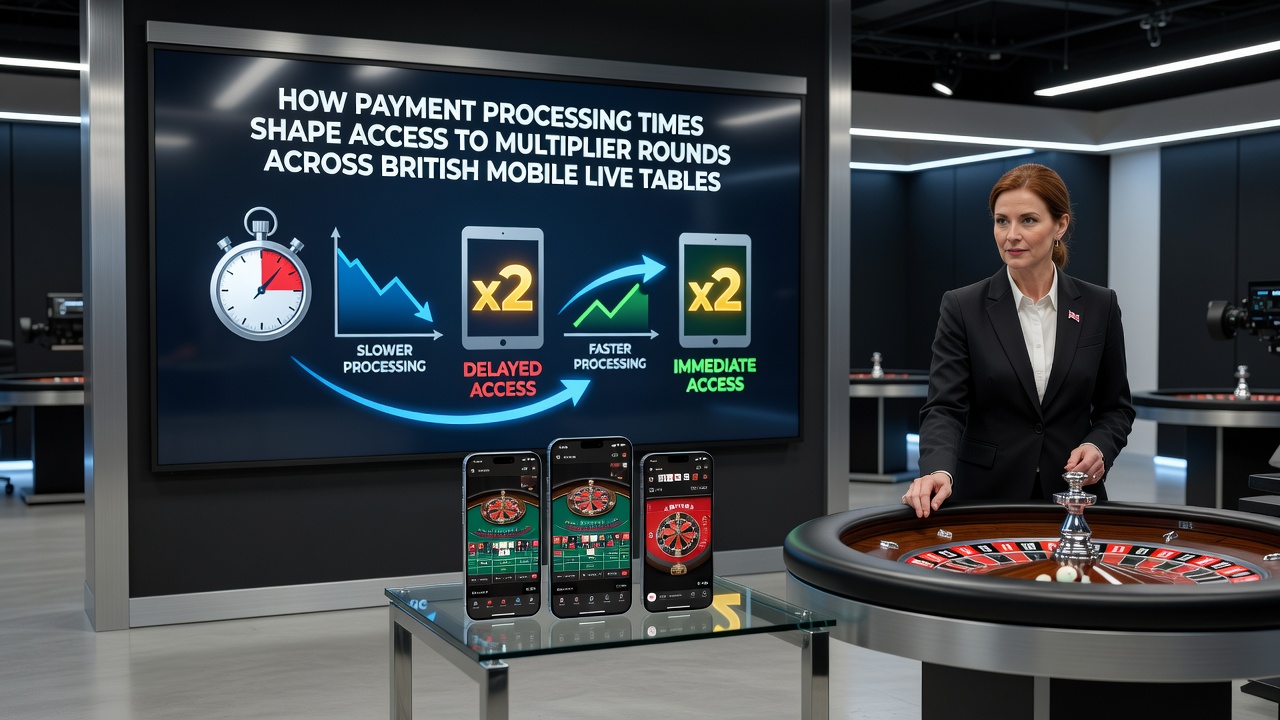
How Payment Processing Times Shape Access to Multiplier Rounds Across British Mobile Live Tables
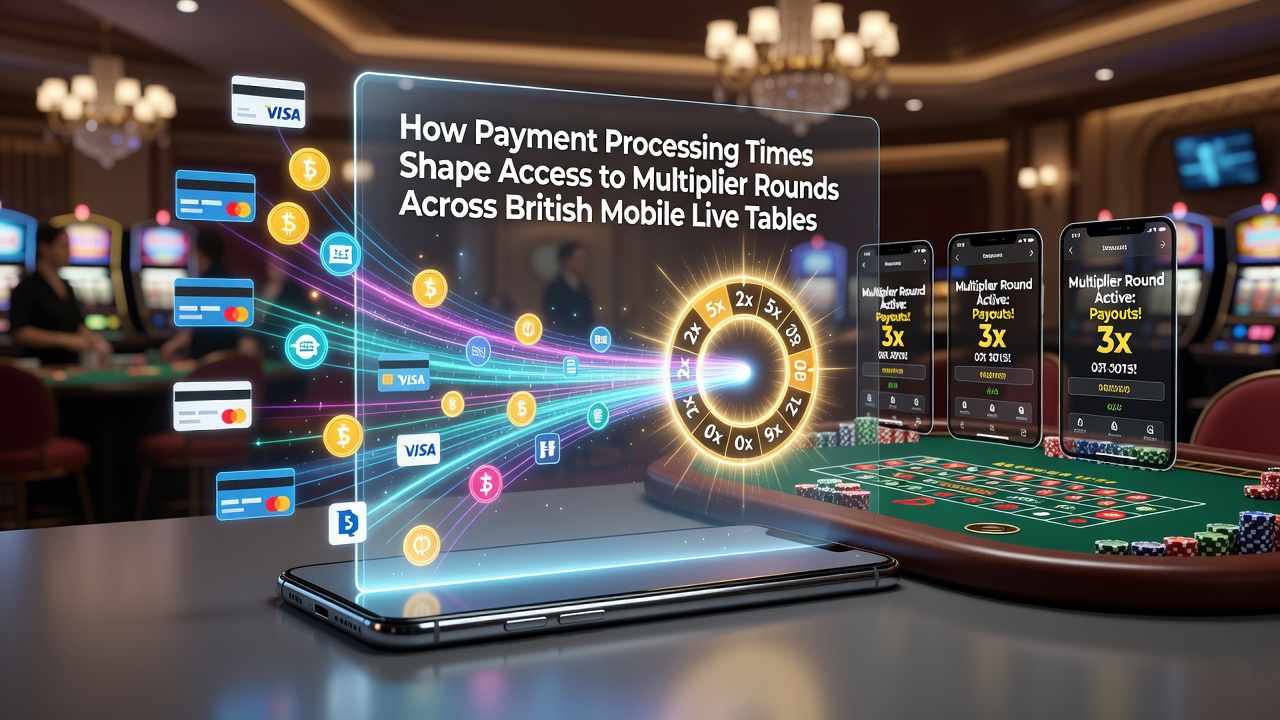 Payment processing times directly influence whether players can join multiplier rounds on British mobile live tables, since these features often activate within narrow windows during ongoing sessions. Live dealer games such as Crazy Time and similar multiplier-based titles require active balances at specific moments, and delays in deposits or transfers can exclude participants even when funds sit in transit. Data from industry monitoring shows that e-wallet transactions typically clear in under 30 seconds on major platforms, whereas bank transfers and some card methods extend to several minutes or longer depending on the provider and network load.
Mechanics of Multiplier Rounds in Mobile Live Environments
Multiplier rounds function as timed events layered onto base games, where wheels or bonus segments award escalating values to active players who maintain sufficient balances. On mobile devices, these rounds unfold in real time with croupiers managing physical equipment streamed to screens across the UK. Observers note that participation hinges on account funding status at the instant a round triggers, which means any lag in crediting deposits can sideline users mid-session. Research from payment analytics firms indicates average mobile casino deposit confirmation ranges from 10 seconds for instant methods to over five minutes for traditional banking routes, creating clear disparities in access. British operators integrate these live tables through licensed platforms that sync with third-party payment gateways, and system logs reveal patterns where players using slower processors miss consecutive rounds during peak hours. Those who've tracked session data across multiple sites find that peak evening periods coincide with higher network congestion, further stretching confirmation intervals for non-instant options.Payment Method Variations and Their Impact on Timing
Different payment channels produce distinct processing profiles that affect round eligibility. E-wallets such as Skrill and Neteller consistently rank among the fastest, often completing verification within seconds adn allowing immediate balance updates on mobile apps. Credit and debit card transactions follow closely in many cases, yet they occasionally encounter additional authentication steps that add 60 to 90 seconds. Bank transfers and direct debits, by contrast, introduce longer intervals that frequently span several minutes, during which multiplier opportunities can arise and conclude without the player. Studies conducted by European payment technology groups highlight that integration quality between casino software and banking APIs determines much of the variance, with some providers optimizing for sub-minute clearances while others maintain legacy systems. Players relying on these slower channels therefore encounter repeated instances where funds arrive after rounds have already distributed multipliers to earlier participants.